


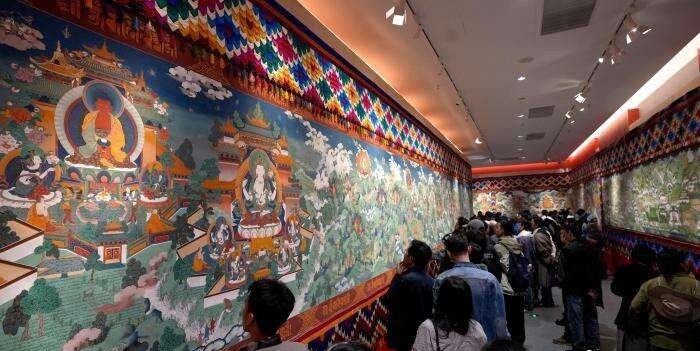
Menri School
#Thangka|Zhaka School ·2025-11-28 16:29:31


Menri School|The Orthodox Canon of Tibetan Buddhist Painting
【Origins and History】
Name: Menri School, also transliterated as Menri or Manri
Status: One of the most authoritative and orthodox traditions of Tibetan Buddhist painting
Founder: Master painter Könchok Chökyi (1432–1478)
Region: Shigatse area, particularly around Sakya Monastery and Menri region
Historical Impact: Became dominant Thangka style across Tibet by 16th century, profoundly influencing later traditions
【Artistic Features】
Color Palette: Bold, saturated mineral pigments with extensive gold powder use
Line Work: Precise, disciplined, strictly following canonical iconographic measurements
Figures: Deities appear tall, upright, majestic, radiating religious authority
Composition: Symmetrical, highly ordered with balanced arrangement of elements
Core Principle: Emphasis on accuracy of proportions and doctrinal iconography
【Religious and Cultural Value】
Canonical Status: Regarded as the standard canon of Thangka painting, like visual scripture
Iconographic Integrity: Embodies precise measurements and iconography prescribed in Buddhist texts
Religious Function: Widely used in monasteries for offerings and meditation, vital to Tibetan Buddhist practice
【Artistic and Collecting Value】
Orthodoxy: Acknowledged as the most canonical style of Tibetan Buddhist painting
Influence: Directly gave rise to Mensar (New Menri) School, inspired countless later painters
Collecting Significance: Authentic Menri Thangkas serve as benchmarks for evaluating painter skill
Cultural Heritage: Ownership represents participation in preserving Tibetan religious and cultural heritage
【Historical Legacy】
System Establishment: 15th-century creation of complete iconometric and painting system
Cultural Propagation: Became mainstream Thangka style across Tibetan monasteries and communities from 16th century
Contemporary Relevance: Remains essential reference standard for evaluating Thangka authenticity and artistry