


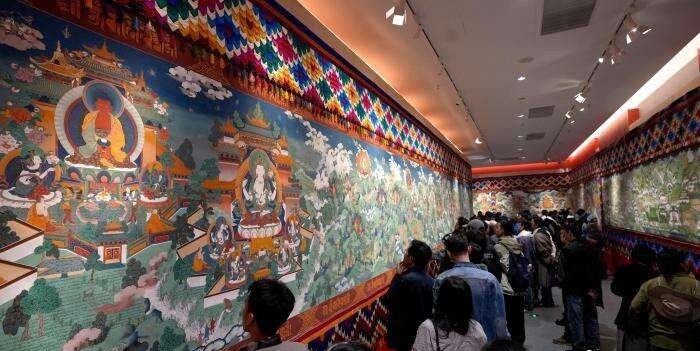
Karma Gardri School (ཀརྨ་སྒར་སྒྲིབ་)
#Thangka|Zhaka School ·2025-11-28 16:27:33


Karma Gardri School|The Lyrical Spaciousness of Thangka Art
【Origins and History】
Name: Karma Gardri School
Period: Emerged in the 17th century
Founder: 10th Karmapa, Chöying Dorje (1604–1674)
Meaning: "Karma" refers to Karma Kagyu lineage; "Gardri" means "encampment style"
Innovation: Blends Tibetan Buddhist iconography with Chinese landscape painting and Nepalese ornamentation
【Artistic Features】
Color Palette: Light and refined, contrasting with Menri's richness and Chiwugangba's density
Line Work: Free, fluid, less bound to strict symmetry, creating natural openness
Backgrounds: Expansive landscapes, vegetation, clouds influenced by Chinese ink aesthetics
Figures: Deities with gentle expressions, natural postures in serene landscapes
Artistic Language: Celebrated for "lyrical spaciousness," breaking from earlier solemn rigidity
【Technical Highlight: Stippling Method】
Signature Technique: Extensive use of stippling in landscapes
Process: Dry-brush tip applied dot by dot with mineral pigments for subtle gradations
Demanding Nature: Far more time-consuming than flat washes or blended shading
Visual Effect: Creates transparency, delicacy, and ethereal beauty—hallmark of the school
【Artistic and Collecting Value】
Uniqueness: Defined by landscapes and stippling, instantly recognizable
Influence: Shaped painting traditions of Kham and Amdo, influenced later developments
Collecting Prestige: Labor-intensive methods and rarity of authentic masterpieces
Artistic Recognition: Celebrated as one of the most artistically captivating Tibetan painting schools
【Religious and Cultural Value】
Iconographic Integrity: Maintains sacred precision of Buddhist imagery
Expressive Expansion: Infuses naturalistic and lyrical elements into Thangka painting
Meditative Function: Serves as support for meditation and visualization
Cultural Dialogue: Records artistic exchange between Tibet, China, and Nepal in 17th century