


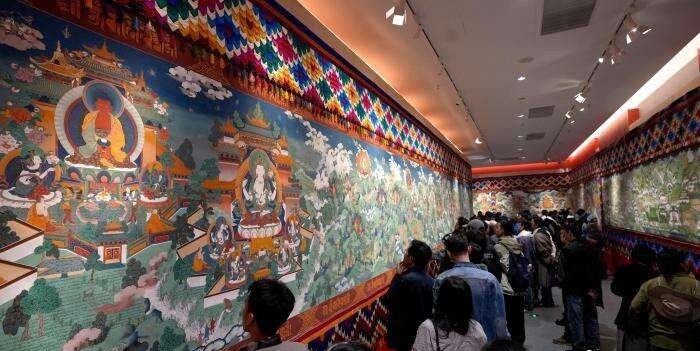
Amdo Qiangba School
#Thangka|Zhaka School ·2025-11-28 16:28:24


Amdo Qiangba School|The Orthodox Painting Lineage of Amdo
【Origins and History】
Region: Originated in the Amdo region
Founders: Established by the Qiangba family of painters
Period: Emerged around the 17th century
Cultural Context: Developed at crossroads of Tibetan Buddhist and Chinese cultural exchange
Artistic Synthesis: Absorbed standards of Menri and Mensar while retaining distinct local identity
【Artistic Features】
Color Palette: Rich and solemn, dominated by deep reds, dark greens, and gold
Line Work: Precise and disciplined, adhering closely to traditional iconography
Figures: Deities with full, majestic features embodying abundance and grace
Backgrounds: Intricate yet restrained, with scroll motifs and sacred symbols
Overall Style: Powerful, solemn, monumental with weight and gravitas
【Religious and Cultural Value】
Canonical Adherence: Strong emphasis on Pratimālakṣaṇa (canonical proportions)
Religious Function: Used in monasteries for devotion and meditation with ritual efficacy
Transmission Value: Represents orthodox continuation of Tibetan Buddhist painting in Amdo
Cultural Importance: Demonstrates strict Thangka traditions extended beyond Tibet into Amdo
【Artistic and Collecting Value】
Rarity: Fewer inheritors than major Tibetan schools, authentic works scarce
Distinctiveness: Emphasizes solemnity and orthodoxy over decorative Rebgong style
Identity: Authentic "orthodox school" of religious painting in Amdo
Collecting Prestige: Valued for weighty, disciplined style; highest standard of Amdo Thangka art
【Lineage and Heritage】
Family Lineage: "Qiangba" became synonymous with this respected painting tradition
Rigorous System: Known for strict transmission, considered most orthodox tradition of Amdo
Contemporary Relevance: Remains important orthodox reference for religious art in Amdo region