


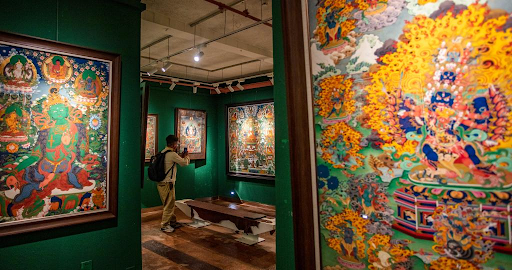
Mahākāla|Lobsang “Color Master”|Mensar School|4×5 cm Thangka (Miniature)
#Thangka|Zhaka ·2025-12-03 11:06:09


Mahākāla | Mensar School
4×5 cm Xiao Zhaka by Lobsang
【Product Information】
Main Deity: Mahākāla
School: Mensar School
Artist: Lobsang – Renowned miniature thangka “Color Master”
Size: 4 × 5 cm
Materials: Natural mineral pigments, gold, cinnabar, lapis lazuli, turquoise, malachite, realgar, etc.
Technique: Deep green ground with complex color blending, rich layering, fine linework, full wrathful composition
【Description】
Mahākāla is one of the most important Dharma protectors in Vajrayāna Buddhism, often arising from the Avalokiteśvara lineage.
He represents:
• Cutting through obstacles that hinder practice and daily life
• Protecting the Dharma, temples, and practitioners
• Subduing negative forces and unwholesome tendencies
• Gathering favorable conditions for virtuous activities and benefiting beings
Widely venerated across Tibet, Mahākāla is regarded as a powerful guardian deity embodying unshakable wrathful compassion.
【Artistic Features】
• The dark green ground involves highly demanding color blending, creating exceptional depth and atmosphere
• The wrathful facial expression is steady and precise, true to classical Mahākāla iconography
• Exceptional difficulty: achieving a complete deity composition with dense details within a 4×5 cm miniature
• Rich layering and shading bring out the three-dimensionality of the body, ornaments, and attributes
• Exhibition-grade miniature thangka with strong artistic presence and high collectible value
【Artist Overview】
Lobsang is a leading contemporary master of miniature thangka painting in Tibet, renowned for his unique deep-green tonal system, which has earned him the title of “Color Master” among fellow artists.
He excels in wrathful themes, particularly the Five and Eight Great Heruka deities, characterized by powerful brushwork, dense color fields, and high visual tension.
Lobsang dedicates only around two months each year exclusively to thangka painting, spending the rest of his time farming, making his works extremely scarce in the market.
His representative pieces have been exhibited at the Tibet Art Museum and have attracted significant attention from both scholars and collectors. Zizaitang houses several of his exhibition-level works, and this piece stands as an important example of his deep-green Mahākāla style.